
How to start a moving company: twelve steps, in the order we would do them again

How to start a moving company without buying a truck first. Twelve steps in the order that works, what each one costs, and the numbers from our own company in upstate New York.
Most guides to starting a moving company are written by companies that sell LLC filings or accounting software, and they start where you would expect: write a business plan, form an LLC, buy a truck, get insured, then go find customers.
That order costs about $30,000 before anyone has paid you, and it is the reason most people who want to start a moving company never do.
I started mine in 2023 with one box. A man with a bad back paid me $75 to carry it from the post office to his house. Our first full year was $85,000, the second was $120,000, and this year the company is pacing $750,000. Here is the order we would do it in if we started again tomorrow, with what each step costs.
Step 1: Decide what you will move first
Not everything. Two kinds of job, to start:
- Labor-only. Loading or unloading a truck, pod or container the customer already rented. No vehicle needed. How labor-only works.
- Single items. A couch across town, a washer into a basement, a dresser up a flight of stairs. The jobs the big companies will not get out of bed for. How we price them.
Full apartment and house moves come a few weeks later, once you have done enough small jobs to know how long things take and have a review or two on your profile.
Step 2: Check what your state requires
We are movers, not lawyers, and the rules differ by state. What is true nearly everywhere:
- Moving household goods across state lines requires a USDOT number and operating authority from the FMCSA. The USDOT number is free and takes about ten minutes online.
- Moving household goods within one state is regulated by that state. Many, including New York, require a household goods permit from the state transportation department. Some require nothing.
- Labor-only work is usually outside those rules, which is why it is the first job most people can take this week.
Search your state's name plus "household goods mover permit" and read the actual government page, not a forum. Do not pay a third-party site to file anything for you. What each license costs, and which jobs need none.
Step 3: Pick a name and get a business phone line
Pick the name in an afternoon. It matters less than you think, and you can change it before you print anything.
The phone line matters more. Use a separate business number that runs on the phone you already own. Ours is Quo, which keeps every call and text for the company in one place, recorded and transcribed. The number goes on the ad, the Google profile and every text you send, so set it up before any of those.
Step 4: Take three photos
Customers fill in what they cannot see with the worst mover they have heard of. Three photos stop that, and none of them need a truck, a crew or a customer:
- A piece of your own furniture, wrapped in a moving blanket and shrink wrap.
- You, in a plain shirt, standing next to a dolly with folded blankets on it.
- The gear laid out like tools before a job: dolly, straps, blankets, wrap.
The three photos, with the captions, are in the course. Replace them with real job photos the first week you have some.
Step 5: Set your price before the phone rings
This is the step that decides whether the first year works. It is also the one I got wrong for a whole year.
Work out what an hour of a job costs you, meaning wages, truck, fuel, supplies and insurance, and double it. Not "add 20 percent." Double. Every dollar of cost becomes two dollars of price.
Our two-mover rate today is $200 an hour, portal to portal, with a three-hour minimum. In a cheaper market it might be $150. In a city it might be $250. The pricing calculator takes your own costs and gives you an hourly rate, a minimum and a flat quote for the same job.
Decide now whether a job gets a flat price or an hourly one. The short version: flat when the scope is defined and the customer will be ready, hourly when either of those is missing. The full rule, with real jobs.
Step 6: Post the ad, start the profile, send twenty texts
Three free or nearly free channels, all on the same day:
- A Craigslist ad in the services section, under labor and moving. Put the price in it. Renew it every 48 hours.
- A Google Business Profile. Free, and where most of our jobs come from now. Google has to verify you first, which can take days or weeks, so start it on day one.
- A text to twenty people you already know, one at a time, saying you have started a moving company.
The profile fields are written out word for word on the first job page. The ad and the text are in the course. Where the customers come from after that is in how to get moving leads.
Step 7: Answer fast and run the same script every time
A lead that waits a day books someone else. Answer inside ten minutes, or call back inside ten.
Then run the same call every time: the same nine questions in the same order, one at a time, then how you work, then the number, then stop talking. The questions are what turn "probably around $400, we'll see how it goes" into a price you can stand behind at the end of the day. The quote script is the whole call, word for word.
Step 8: Take a deposit on every booked job
Ours is 20 percent of the low end of the estimate, or a flat $100 on a small job. It is asked for on the same call where the customer says yes, and it comes off the final balance.
The date is held when the money lands, not when they say "Saturday works." The deposit is also what lets you rent the truck with the customer's money instead of your own. How much, when, and how to ask.
Step 9: Rent the truck after the deposit lands
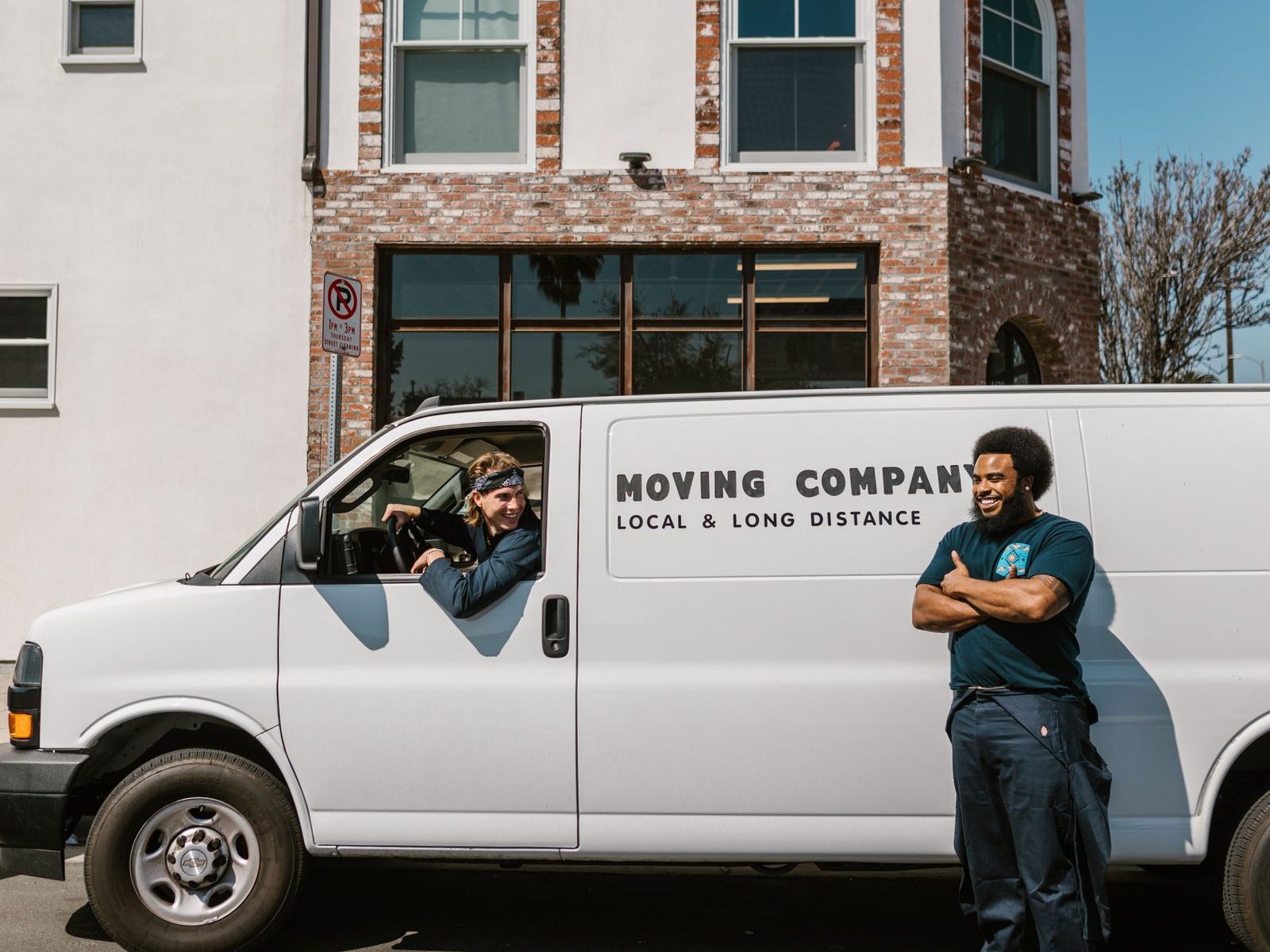
The truck is the last thing you buy. We rented every truck we used until 2026, when we bought a pickup and a trailer, and we still rent box trucks when a job needs one. Once the deposit is in, reserve a 15 or 20-foot truck with a ramp from a commercial rental desk and tell them it is for a moving business. Consumer rentals like U-Haul are for do-it-yourself moves only, and their terms can void the coverage on a paid job. What the rental terms say. A 26-foot rental does not need a commercial driver's license, but it does need someone who can back it up a driveway, so start smaller.
The gear for your first jobs fits in a car: a dolly, four blankets, two ratchet straps, shrink wrap and tape, for under $150. The full kit, two furniture dollies, an appliance dolly, four to six straps, a dozen blankets, two rolls of wrap, a tape gun and gloves, is around $400 new or $200 used, bought out of jobs you have already been paid for.

Step 10: Do the first job like it is a $3,000 job
The first job will be small. Take it at full price and treat it like a big one.
- Wrap everything, even one dresser going ten minutes.
- Take photos at the job, with the customer's permission. They replace the photos you took at home.
- Invoice from the truck before you pull away, with the deposit already subtracted. Never leave with the balance "coming tonight."
- Ask for the Google review at the truck, with the link already texted to them. One review on a new profile is worth more than the job paid.
Step 11: Form the LLC and buy insurance before the furniture gets big
Before you carry a box for $75, you do not need an LLC. Before you take a full-house move, you do.
- LLC. Somewhere between $50 and $500 depending on the state. You can file it yourself in a week or two. Get the EIN from the IRS the same day, free, so the bank account and the insurance are in the company's name.
- General liability. Covers damage to the customer's home and injuries to the customer. Expect roughly $50 to $150 a month for a small operation. Buy it before the first job with furniture in it.
- Cargo coverage. Covers the customer's belongings while you have them. Your state permit may set a minimum.
- Commercial auto. Only if you own the truck. If you rent, get the rental's coverage in writing from a commercial desk and ask your agent about hired auto liability for rented vehicles.
- Workers' comp. In most states, including ours, required the day you have an employee. Get a quote before you hire.
What each policy covers, and how to handle damage when it happens.
Step 12: Hire a foreman and get off the truck
For two years I was the one on the truck every day. The business paid well and it never grew, because the ceiling was my own arms.
Hire when you are turning down jobs because there are not enough of you, and not before. The first real hire is a foreman, someone who can run a job, drive the truck and talk to the customer without you. Pay at the top of your range to get that person. Ride along for ten jobs, then stay home. Hiring your first helper and your first foreman. This August the company billed $82,000 across fifty-two jobs, and neither of us carried a box on any of them. What the crew makes, and what the owner keeps.
How much does it cost to start a moving company?
Under $50 before your first customer pays you, if you do it in this order: a few dollars for a Craigslist ad, a free Google Business Profile, and a truck rental paid for out of the job.
What costs money later is the gear (around $400 new), the LLC ($50 to $500), general liability (roughly $50 to $150 a month), a state permit if your state requires one, and eventually a truck. Every one of those is bought out of money customers already paid you, not before.
How long until it replaces your income?
For most people, into the second year. Ours was $85,000 gross in the first full year with me on every job, which is not even one good salary. The second year was $120,000. The jump to this year's pace came from pricing correctly, hiring a crew, and moving the front office onto systems, not from working harder.
Most people should keep their job while they start. Customers move on Saturdays, and the phone can be answered at lunch. The one thing you cannot do part-time is answer slowly.
The short version
Small jobs first. Price before the phone rings. Deposit before the truck. Insurance before the furniture gets big. Foreman before the second truck. Every step is paid for by the one before it.
If you want someone to check your plan against your own market before you spend anything, that is what the strategy call is for: an hour with both of us on your town, your pricing and your first jobs. Every term used here, from portal to portal to cargo coverage, is in the glossary, and thirty-five more questions are answered in the FAQ.
- Moving pricing guideHourly or flat, how to say the rate, and how the math works. The calculator itself is in the course.
- Quote-call openingHow our quote call starts, word for word, with your name and rate filled in. The rest is in the course.
- Google Business Profile fieldsFree: what to set up first and the profile fields, word for word.
- One job, start to finishA real one-bedroom move, every message with its timestamp.
- Moving industry FAQThirty-five questions about getting in: trucks, licenses, insurance, pricing, hiring, when to buy the truck.
- GlossaryPortal to portal, released value, COI, and fifty more terms in plain English.
More from the blog
 How to start a moving company in Arizona: no state license, the hostage load law, what it costs, and what to do this weekArizona is one of the few states with no household goods mover license at all. What governs you instead is a 2017 consumer statute on contracts and hostage loads, ADOT's commercial registration and weight fees, and the ordinary rules on insurance, tax and employees. What each one requires, what it costs, and the work you can take this week.11 min read
 How to start a moving company in Georgia: the DPS household goods certificate, the maximum rate tariff, what it costs, and what to do this weekGeorgia licenses movers through the Department of Public Safety and publishes the maximum rate every mover may charge. What the household goods certificate costs, the insurance it requires, the state's hourly ceilings and minimums, the paperwork every Georgia move needs, and the work you can take before any of it.13 min read
 How to start a moving company in Illinois: the ICC license, the hearing, what it costs, and what to do this weekIllinois licenses movers through the Illinois Commerce Commission, and it is one of the few states that makes you prove a public need at a hearing, pass a written exam and file a rate tariff before the first paid move. What the license costs, the insurance it requires, the rules on estimates and liability, and the work you can take before any of it.13 min read
 How to start a moving company in North Carolina: the certificate of exemption, the maximum rate tariff, what it costs, and what to do this weekNorth Carolina licenses movers through the Utilities Commission and publishes the maximum hourly rate every mover may charge. What the certificate of exemption costs, the insurance it requires, the state's rate ceilings and estimate rules, and the work you can take before any of it.13 min read
 How to start a moving company in Ohio: the PUCO certificate, what it costs, and what to do this weekOhio licenses movers through the Public Utilities Commission, and the certificate is cheap, online and quick. What it costs, the insurance it requires, the tariff you write yourself, the paperwork every Ohio move needs, and the work you can take before any of it.12 min read