
The course · opens November 3
Moving Company in a Month.
The first month as an action plan, then the first year after it: how to find the first customers, price the job, run it, and build a company that runs jobs without you on the truck. Taught by Liam, with Jacob, from what Hercules Moving Heroes actually does.
- For people with a phone, a free weekend and no truck
- And for owners already doing jobs, stuck on the truck
- Shot on real jobs, with our real numbers
- Nine templates we run the company on
Not sure yet? See what the first month produces, how we teach, or every lesson.
The first month
What you can do after the first month.
You do not need all 124 lessons before you do anything useful. The first eight modules are the month in the name: a short path from nothing to the first small job, with the rest of the course waiting until you have a reason to open it.
It is an action plan, not a promise. Jacob's first customer came within days of posting; yours depends on your town, your post and how fast you answer the phone. The plan gets you ready to say yes when the first call comes.
- 1The first job. Modules 0 to 7: what you are selling, the gear, free channels, the call, the quote, the close, the craft of moving, running the day.
- 2To $100K. Modules 8 to 12: pricing from real numbers, reviews, paid leads, the website and photos, your first hire.
- 3Past the ceiling. Modules 13 to 17: why owners stall at $100K to $200K, finding a foreman, the software we run on, the second crew, what we got wrong. Module 18 is licensing and insurance: what exists and who to call, a map rather than legal advice.
Worksheet · end of the first month
You will have
- A name, a business line and a Google Business Profile, set up the way ours is (Modules 1 and 3)
- A gear list and the rent-or-borrow decision for the first truck (Module 2)
- A rate you can say out loud, from your costs, and a flat price for single items (Modules 4 and 8)
- The Craigslist post and the quote call, word for word, with your numbers filled in (Modules 3 to 5)
- The agreement sent, the deposit taken, the crew briefed, the day sequenced (Modules 5 to 7)
- The review asked for at the truck (Module 7)
Each item maps to a template or a lesson. Open the curriculum below to see the lesson titles behind it.
How we teach
See it before you buy it.
We have no lesson clips or course screenshots to show you yet; the lessons are being finished for November 3 and we would rather show you nothing than a mock-up. What we can show you is the same material taught the same way, free, on this site. If these are useful, the course is more of the same, in order, with the parts we do not publish.
- The quote call, as a scriptHow Lesson 4.2 is taught: the opening of our call, word for word, with your name and rate filled in. The course has the rest of the call and the pushback answers.
- A real job, message by messageHow Module 7 is taught: a one-bedroom move from the web form to the review, every text and email with its timestamp, and the crew briefing the movers worked from.
- The pricing mathHow Module 8 is taught: cost a crew hour, double it, say the rate with a range. The course has the calculator that does it with your numbers.
- The profile fieldsHow Lesson 3.1 is taught: the Google Business Profile, field by field, in the words we used. Free, because Google is free.
A template, excerpted
The crew briefing, as the crew sees it.
Every job gets a one-page briefing on the calendar invite. This is the shape of the template, with the job removed. The filled-in version from a real job is on the one-job page; the blank, with the notes on how to fill each line, is in the course.
Crew briefing · [client] · [day, date] · [start time]
- Rate
- [$/hr · movers · minimum · estimated hours]
- Deposit
- [amount, how paid] · Contract [signed date / pending]
- Vehicle
- [truck or trailer, rental pickup time and place, drive time]
- Pickup
- [address]. [Floor, stairs, elevator, parking, gate code, pets, who meets the crew.]
- Drop-off
- [address]. [Access notes. Drive time from pickup.]
- Not moving
- [items the customer is keeping or moving herself]
- Heads-ups
- [the thing that could add an hour: parking, a piano, a two-hour minimum in the contract that should say three]
- Payment
- [balance, deposit deducted, accepted methods]. Clock stops back at the shop.
Excerpt. The course version has every section, the day timeline and the notes on filling it in.
What is included
The lessons, the templates, and us in the group.
- 19 modules, 124 short lessons, on Skool, in any browser or the Skool app. Watch a lesson on the truck, open the template on a laptop.
- Nine templates: the quote calculator, the contract, the crew briefing, the damage claim process, the job checklist, the startup cost sheet, the interview questions, the review request scripts and the gear checklist.
- Questions answered in the course group. Ask in the group and we answer there; it is not unlimited one-on-one time. For that there is the strategy call or mentorship.
- Access for as long as the course exists, with every update to a lesson or a template included. One price, no renewal.
When you get what
On November 3, and after.
- On day one: all 19 modules, all 124 lessons and all nine templates. Nothing is held back for a later release.
- After that: when we update a lesson or a template, you get the new version, included.
- Payment plan: full access with the first $179. If a payment fails, access pauses until it goes through; all three stay due.
- No refunds. All course sales are final, which is why every lesson is listed below and the free pages above show how we teach. If it is not what you need, do not buy it.
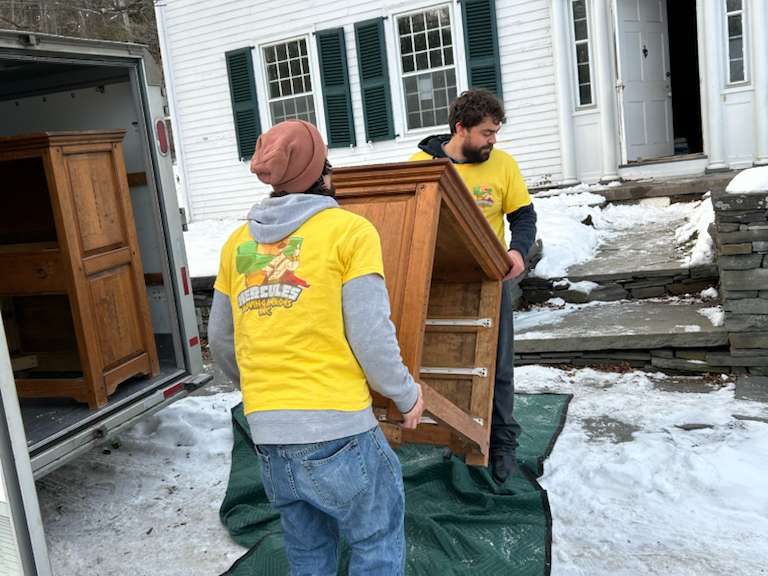 Module 6, the craft, is shot on jobs like this one.
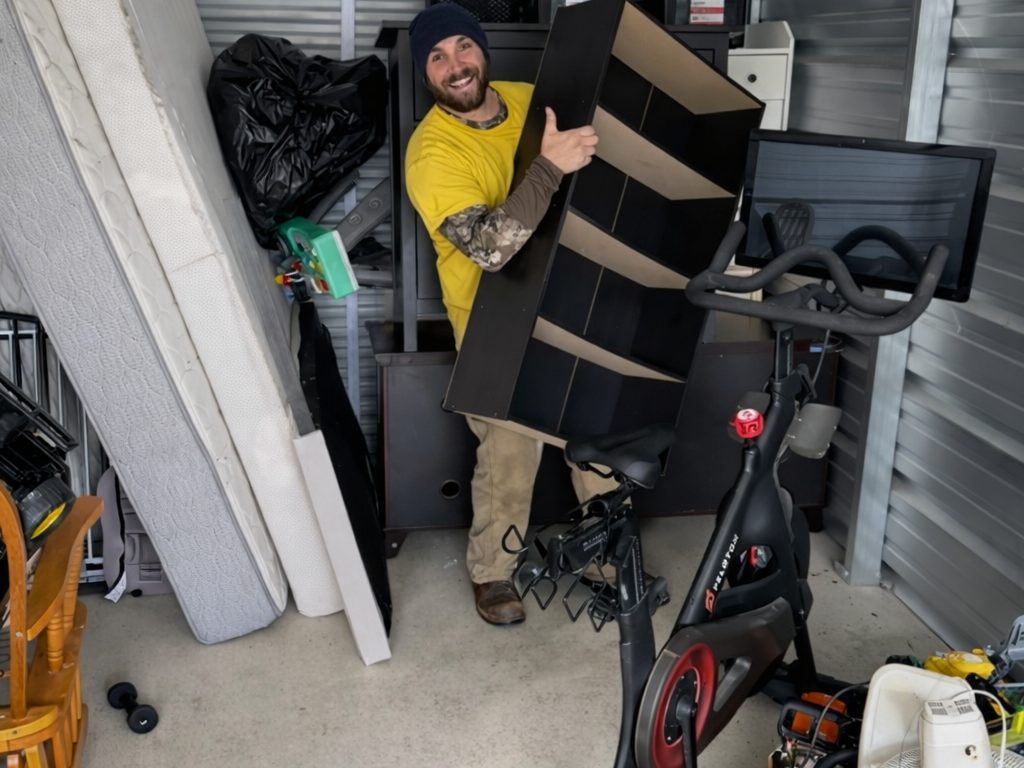 A storage unit load, priced flat.
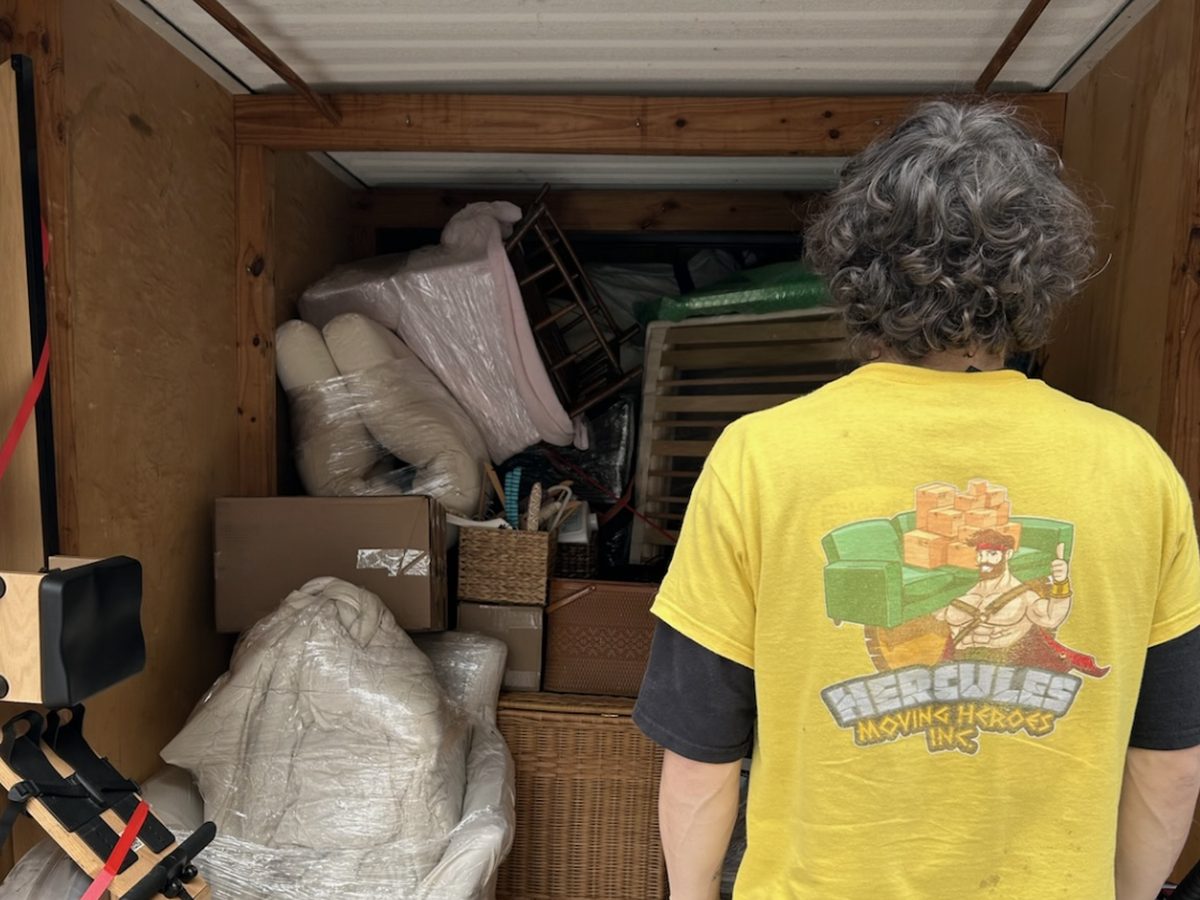 A rental, loaded, on a local job.
The curriculum
Every module, every lesson.
Nineteen modules, 124 short lessons. Open any module to see what is in it. Modules 0 to 7 are the first month; the rest is the first year, and Module 18 is the licensing and insurance map.
Module 0Welcome1 lesson
One video, about a minute. Who we are, what you’ll learn, and that the results are up to you.
- 0.1Welcome to Moving Company in a Month
Module 1The business you’re actually starting6 lessons
What a local move is, who it works for, and what has to be sorted before you take money.
- 1.1What a local move actually looks like
- 1.2What you’re really selling
- 1.3Who this works for and who should skip it
- 1.4Local vs long distance vs labor-only
- 1.5The three stages of a moving company
- 1.6Registered, insured, and ready
Module 2Starting lean6 lessons
The gear, the vehicle question, and booking the job before you reserve the truck.
- 2.1The actual gear list
- 2.2What to rent, what to borrow, what to skip
- 2.3Booking the job before you reserve the truck
- 2.4Truck sizing
- 2.5What rental coverage does and doesn’t include
- 2.6Using your own vehicle for single-item work
Module 3Getting found5 lessons
Free channels only. Where the first ten jobs actually come from.
- 3.1Setting up Google Business Profile
- 3.2Writing a Craigslist ad that gets calls
- 3.3Facebook Marketplace and local groups
- 3.4Naming and positioning in your market
- 3.5Where your first ten jobs actually come from
Module 4From call to quote7 lessons
Everything between the phone ringing and the number going out.
- 4.1Answering the phone like a business
- 4.2The questions to ask on every call
- 4.3Walkthroughs and video surveys
- 4.4Estimating how long a job will take
- 4.5Hourly vs flat rate
- 4.6Building and sending the quote
- 4.7Reading the jobs you should turn down
Module 5Closing the job8 lessons
The quote is the start of a competition. This is where most people lose without knowing why.
- 5.1Response speed and why it decides everything
- 5.2Following up without being annoying
- 5.3Handling the objections you’ll hear every week
- 5.4Competing against the cheap guy
- 5.5Building trust fast with a stranger
- 5.6When to hold your price and when to walk
- 5.7Deposits and locking the date
- 5.8Finding out why you lost
Module 6The craft of moving13 lessons
The actual skill. Shot on real jobs, not at a desk.
- 6.1Lifting and carrying without wrecking yourself
- 6.2Two-man coordination and verbal cues
- 6.3Blankets, shrink, and tape
- 6.4Disassembly and hardware management
- 6.5Dollies: which one, when
- 6.6Straps and securing a load
- 6.7Stairs, doorways, and tight turns
- 6.8Protecting the house
- 6.9Loading the truck
- 6.10Pianos, safes, and heavy specialty items
- 6.11Hot tubs and exercise equipment
- 6.12Glass, art, and fragile pieces
- 6.13What actually breaks and why
Module 7Running the job8 lessons
The logistics of the day, start to finish.
- 7.1Before the crew leaves
- 7.2The walkthrough
- 7.3Setting expectations with the customer
- 7.4Sequencing the day
- 7.5When the job is bigger than quoted
- 7.6When something breaks on site
- 7.7Closing out and getting paid
- 7.8Asking for the review
Module 8Pricing and money9 lessons
Setting rates from real figures, and knowing whether the business is actually working.
- 8.1What a crew hour actually costs you
- 8.2Truck, fuel, and equipment costs
- 8.3Insurance and compliance as a line item
- 8.4Setting your hourly rate
- 8.5When flat rate makes sense
- 8.6Travel time and minimums
- 8.7Accessorials: stairs, long carries, heavy items
- 8.8Raising prices
- 8.9Knowing your numbers monthly
Module 9Reviews and reputation5 lessons
The free channel most movers ignore. Ceiling-breaker number two.
- 9.1Why reviews outperform every paid channel
- 9.2When and how to ask
- 9.3Scripts that work
- 9.4Handling a bad review
- 9.5Keeping the Google profile active
Module 10Paid leads5 lessons
What they cost, what they return, and when they’re worth it.
- 10.1Is buying leads worth it at your stage?
- 10.2The landscape: Thumbtack, Yelp, LSA, HireAHelper, Moving Help
- 10.3What a lead actually costs
- 10.4Why paid leads are a race
- 10.5Tracking cost per booked job
Module 11The website and the photos6 lessons
Ceiling-breaker number one.
- 11.1What a moving company site has to do
- 11.2The pages every mover’s website needs
- 11.3Taking photos on real jobs
- 11.4Writing copy that converts
- 11.5Local SEO essentials
- 11.6Build it, buy it, or hire it
Module 12Your first hire6 lessons
Going from solo to two.
- 12.1Day labor vs employee
- 12.2Where movers come from
- 12.3What to pay
- 12.4Screening and the trial job
- 12.5Onboarding
- 12.6Letting someone go
Module 13The ceiling4 lessons
Why almost everyone stops at $100K to $200K.
- 13.1Why $100K to $200K is where people stop
- 13.2The owner-on-the-truck trap
- 13.3What has to change
- 13.4What it feels like from the inside
Module 14Finding a foreman6 lessons
Ceiling-breaker number three, and the one nobody teaches.
- 14.1What a foreman actually does
- 14.2What to look for
- 14.3Testing someone before you rely on them
- 14.4What to pay and how to keep them
- 14.5Handing over a job
- 14.6Quality control when you’re not there
Module 15Systems and software10 lessons
The software we actually run the company on, and how each piece is used day to day.
- 15.1The stack we run on, and what it costs per month
- 15.2Quo: one business number, shared texting, never missing a lead
- 15.3Claude: quoting, contracts, customer texts, and the back office
- 15.4Scheduling and dispatch
- 15.5Truck GPS: TruckMap and Hammer for truck-safe routes, low bridges, and restrictions
- 15.6Crew timekeeping
- 15.7Contracts and e-signatures
- 15.8Getting paid: cards, payment links, invoices
- 15.9Quoting consistently across people
- 15.10What to set up on day one vs later
Module 16Buying the truck and scaling crews7 lessons
When ownership finally beats renting, and running more than one crew.
- 16.1When ownership finally beats renting
- 16.2What to buy
- 16.3Staying under CDL weight limits
- 16.4Financing and insuring it
- 16.5Maintenance and downtime
- 16.6Adding the second crew
- 16.7Scheduling two trucks
Module 17What we got wrong5 lessons
The part nobody else publishes.
- 17.1The jobs we priced badly
- 17.2The hires that failed
- 17.3The damage claims
- 17.4What we’d do differently from day one
- 17.5Where this business can go
Module 18Licensing and insurance7 lessons
What exists, why it matters, and who to call. A map, not legal advice.
- 18.1Why this module is a map, not legal advice
- 18.2Registering the business and choosing an entity
- 18.3Insurance: general liability, cargo, auto, and workers comp
- 18.4Local vs interstate: when the rules change
- 18.5Your state’s moving authority and how to find it
- 18.6Contracts, deposits, and what your paperwork should cover
- 18.7Who to call: broker, accountant, attorney, and the questions to ask each
Included
The templates we run the company on.
For a lot of people these are worth more than the videos. They are the documents Hercules actually uses, with our numbers in them, for you to put yours in.
Quote calculator
Your crew, wage and truck in; an hourly rate and a flat quote out.
Contract template
The agreement we send customers, with the clock and the deposit explained.
Crew briefing template
What the crew gets before every job. Excerpted above.
Damage claim process
Step by step, from the phone call to resolution.
Job checklist
Truck load-out through the final walkthrough.
Startup cost sheet
Line by line, what it takes to open in your state.
Interview questions
For helpers, movers and foreman candidates.
Review request scripts
Text and email, day of and day after.
Gear checklist
Everything from lesson 2.1: own, rent, and add as you grow.
Free vs. the course
A lot of this site is free. Here is the difference.
The profile fields, the pricing guide, the opening of the quote call, one real job start to finish, the FAQ, the glossary and the blog are free and will stay free. They are the pieces.
The course is the whole thing in order: what to do this week, what to ignore until month three, what to set up before the first hire. And the parts we do not publish: the full quote call, the Craigslist post, the calculator, the contract, the crew briefing, the damage claim process, the jobs we priced badly and the hires that failed.
Course, call or both?
They do different jobs.
The course, $497, or three payments of $179 ($537 in total). The method, in order, with the templates, at your own pace.
The strategy call, $249.99. One hour with both of us on your market, your pricing and one decision. Built for a specific question that needs your numbers in it.
Both, $647. The course and the call together, $99.99 less than buying them separately. Book the call whenever it is most useful; most people get the most out of it after Module 8, with real numbers to bring.
Mentorship, $1,497 a month. A call with us every week, a text thread in between, and the course included. For an owner already doing jobs who wants off the truck.
Who it is for
Buy it if.
- You want to start, and you want the order. You have a phone and a free weekend, and you want to know what to do first, second and tenth.
- You have started and you are stuck. The jobs come in sometimes, the money is fine sometimes, and you cannot see why it is not growing.
- You are on the truck every day. You are somewhere under $150K and the only way up looks like more of your own hours.
Who it is not for
Skip it if.
- You want someone to do it for you. We show you exactly what we did. The calls, the jobs and the hiring are still yours.
- You want a guarantee. Our numbers are real and they are ours. Your market, your effort and your decisions decide yours. All sales are final.
- You want long-distance moving. This is a local moving business. Interstate work is a different license, a different insurance bill and a different course.
Questions
Before you buy.
When does it open, and what does it cost?
November 3. $497 in one payment, or three monthly payments of $179, which is $537 in total. With the strategy call added, $647. The waitlist gets the link by email that day, before it goes anywhere else.
Why "in a Month"?
Because the first eight modules are built as one month's work: set up the profile and the post, price the first job, learn the call, be ready to run the day. That is how Jacob's first job came in 2023: a free Google profile, a Craigslist post, twenty texts, and one small job taken at full price. The name is the plan, not a promise that a customer pays you inside thirty days. The rest of the course is the first year after that.
Do I need a truck, a license or money to start?
No truck: you book the job and rent one out of the deposit, or start with labor-only work that needs no vehicle. Licensing depends on your state and the kind of work, and Module 1 covers what to sort out, who sorts it out, and the questions to ask them. Jacob spent under $50 before his first customer paid him; plan on more, for blankets, dollies and whatever your state requires.
How do I get in, and does it work on a phone?
The course lives on Skool. After checkout you get a login by email, and it runs in any browser or in the Skool app on iPhone and Android. Watch a lesson on the truck between jobs, then open the template on a laptop when you need to edit it.
How long do I keep access?
For as long as the course exists. One price, no renewal. When we update a lesson or a template, you get the new version, and we will keep updating, because our own numbers keep changing.
How does the payment plan work?
Three payments of $179: one at checkout, then one a month for the next two months, on the same card. $537 in total, $40 more than paying once. You get full access with the first payment. If a payment fails, access pauses until it goes through.
What is in the bundle?
The course and one strategy call, for $647 instead of $746.99. After checkout you get the course login and a private booking link for the call, with no second charge. Book it whenever it is most useful. Most people get the most out of it after Module 8, when they have real numbers to bring.
Is every module ready on November 3?
Yes. All 19 modules, 124 lessons and nine templates are in the course on November 3. Nothing is released later, and every lesson is listed on this page so you can see exactly what is there before you buy.
Can I ask you questions?
Yes, in the course group. We answer questions there; it is not unlimited one-on-one time. For that there is the strategy call, or mentorship if you want us every week.
Is there a refund?
No. All sales are final. That is why every module and lesson is listed on this page: read it, and if it is not what you need, do not buy it. If you are not sure, the free pages above are a fair sample of how we teach.
Is this legal or tax advice?
No. We are movers, not lawyers, accountants or insurance agents. The legal lessons are a map: the categories, who to call, and the questions to ask them. Nothing in the course is state-specific legal advice.
Who teaches it?
Liam, who runs Hercules Moving Heroes in the Hudson Valley with Jacob. Jacob started the company with one $75 box in 2023, and Liam joined at the end of 2025 and built the front office that got Jacob off the truck. More about us.
Opens November 3.
Join the course waitlist and the checkout link comes to your inbox first. $497, or three payments of $179.
Want an answer before then? Book a call. One hour, both of us, $249.99.