
The quote-call opening
The exact words we use when a customer calls for a price.
This is the call that decides whether you get paid double or get talked down to nothing. Below is how our quote call starts, in the words we actually say. Liam takes most of ours. This is his, written down. Type in your name, your company and your rate, and the script fills them in. The rest of the call, from how you work to the deposit, is in the course.
- No hard sell in it
- Nine questions, one at a time
- Ends with a deposit, not a "maybe"
- Works by phone and by text

Before you pick up
You are not selling. You are confirming.
By the time someone calls, they have already seen your photos, your reviews or your listing, and decided roughly how much they trust you. The call does not create that. It confirms it or breaks it. So the job on the phone is simple: sound like a company, ask the right questions in the right order, say how you work, say the number, and ask for the date.
Answer, or call back inside ten minutes
Most people call three movers. The first one who picks up and sounds like a business gets the job a lot of the time, before price is even discussed. If you missed it, call back, do not text back.
Have your number before the phone rings
You do not work out the price on the call. Run your costs through the calculator once for a one-bedroom, a two-bedroom and a three-bedroom, and keep those numbers on a card by the phone.
Same nine questions, same order, every call
Write them down. Asking the same questions every time is what makes you sound like you have done a thousand of these, even when it is your third.
 Most quotes start as a text now. The script works one question per message.
 “We wrap every piece before it moves.” Say it on the call, then do it.
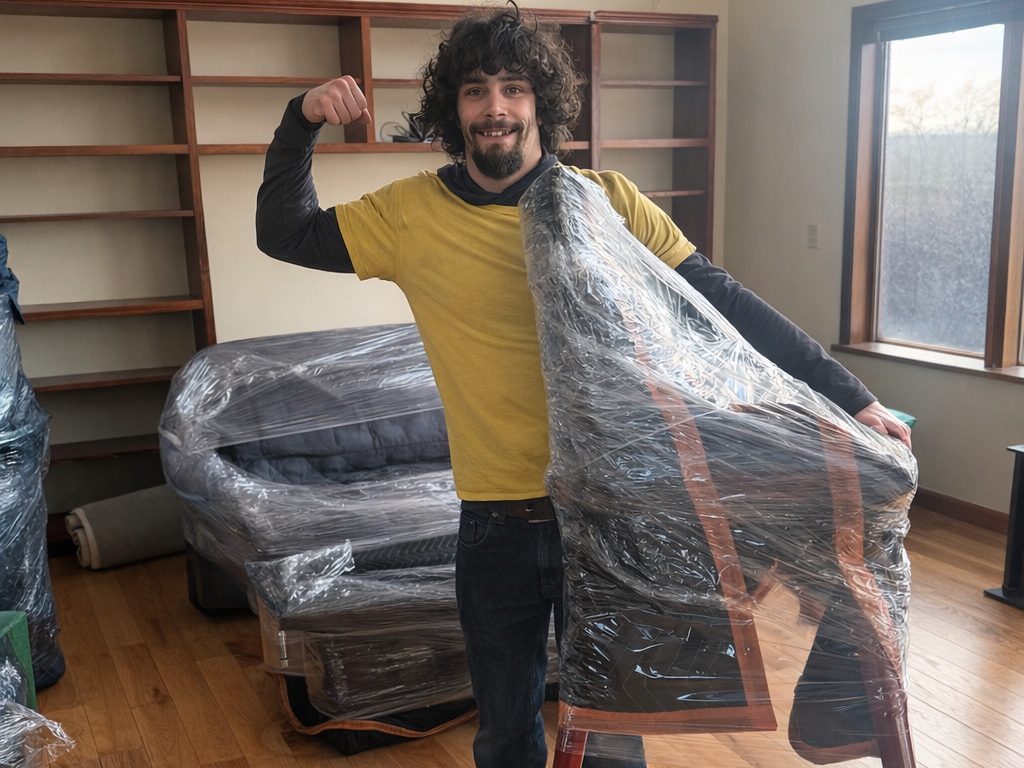 The job the call is about. Sound like the company that shows up for it.
The script
The quote call, word for word.
Anything in [brackets] is yours to fill in. Everything else, say as written until you have done twenty calls and know what you want to change.
Make it yours
Type your details once and every bracket below fills in. Saved on this device only, so it is here next time.
Stage 1
Pick up
"[Company name], this is [your name]."
"Hi, I'm looking to get a quote for a move."
"Happy to help. Let me grab a few details so I can give you a real number instead of a guess. Where are you moving from?"
Why it works. The company name comes first. "Hello?" makes you a guy with a truck. "A real number instead of a guess" tells them the questions are for their benefit, so they answer every one of them instead of pushing for a price in the first ten seconds.
Stage 2
The nine questions
One question. Then stop talking and write down the answer. People fill silence with exactly the detail you need. Two questions in one breath gets you half an answer to each.
"Where are you moving from?"
Town, and house or apartment. If they give the street, write it down.
"And where is it going?"
This is your drive time, and it is the first thing that decides flat or hourly.
"What day are you looking at?"
If they are flexible: "Weekdays are easier to fit, and sometimes cheaper for you, if that helps." Now you are steering your own calendar.
Six more questions follow, in the same order every time. They are in the course, with the rest of the call.
Locked
The rest of the call is in Moving Company in a Month.
Questions four to nine, and everything after them, with the brackets filled in from the panel above:
- Stage 3: how you work, said before the price, so the price sounds like a company said it
- Stage 4: the number, flat and hourly, and what to say when you are not sure of it yet
- Stage 5: the close, to a deposit and a held date
- Stage 6: “Let me think about it,” and the one follow-up text
- The text-message version, one question per message
- The ten rules the script is built on, and six answers to pushback
All course sales are final, so every module is listed on the course page before you buy.
Want us to hear how you quote?
Bring a real lead to the call and we will run it with you, line by line, in your market with your numbers. Then you do the next one alone and it sticks.