
How to get moving leads when nobody knows your company yet
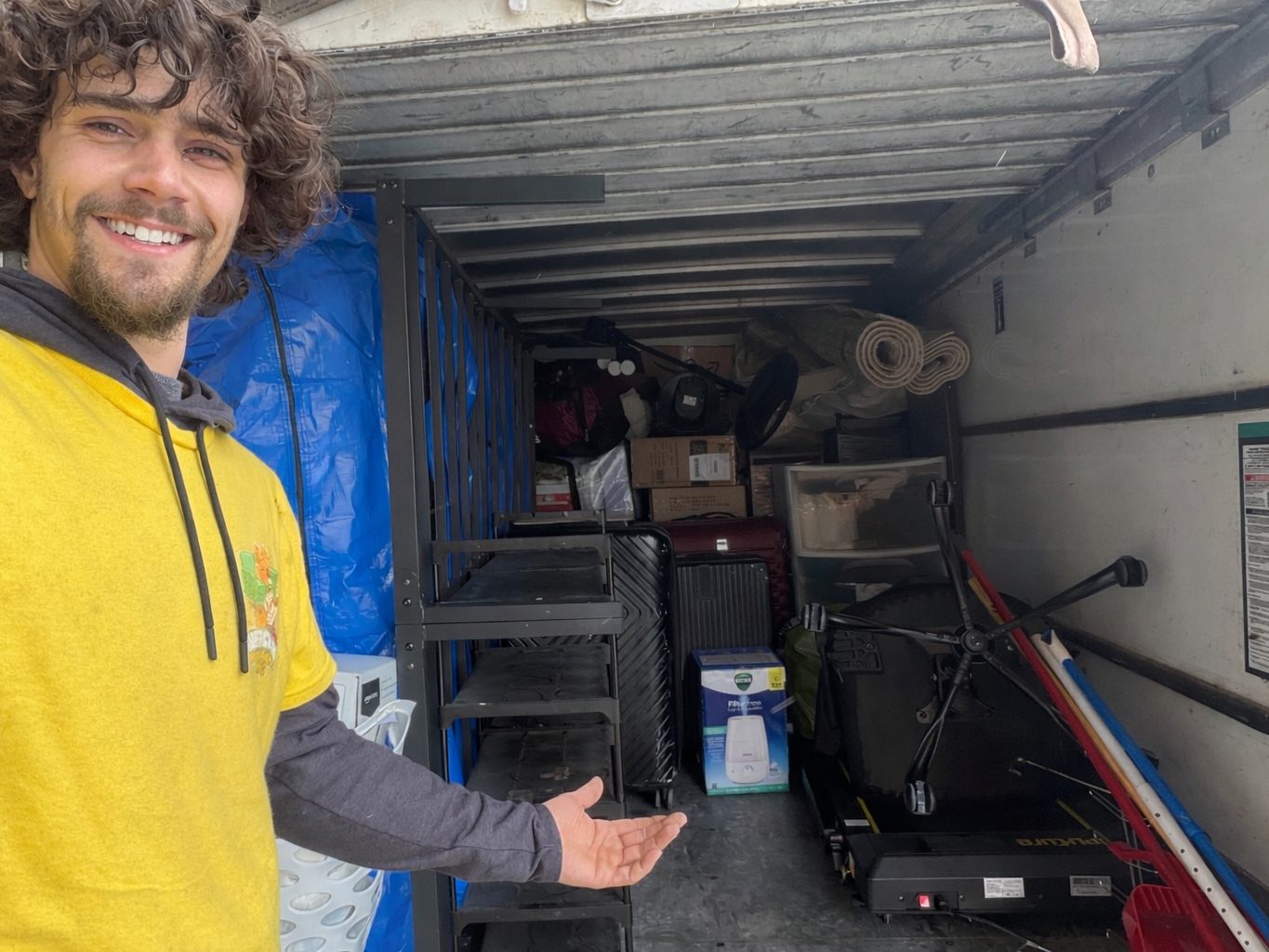
Where a new moving company's first customers actually come from, in the order to set them up: Google Business Profile, Craigslist, twenty texts, then the paid platforms, and what each one costs.
Search "how to get moving leads" and you get two kinds of advice. Software companies tell you to buy their software. Lead companies tell you to buy their leads. Neither one is wrong, exactly, but neither one is where a new moving company's first customers come from.
Ours came from three places that cost almost nothing, and the paid channels came later, once there were reviews for them to land on. Here is the order, what each channel is good for, and what it costs.
Why the order matters
Every paid lead source works better with reviews behind it, and you cannot buy reviews. You earn them on small jobs. So the free channels come first, because their job is not only to bring in customers, it is to turn your first five customers into five reviews.
The first five reviews are the hardest and matter more than the next fifty. They are the difference between a listing with no stars and a real company.
1. Google Business Profile
This is where most of our jobs come from now, and it is free.
It will not get you your first job, because Google has to verify you first, and that can take days or weeks. Start it on day one anyway so it is working by the time your first small jobs turn into reviews.
Fill it in exactly, because Google suspends profiles that cut corners:
- Name: the business name, nothing added. Not "Smith Movers Best Cheap Moving Springfield."
- Category: Mover.
- Address: a service-area business with the address hidden. Do not show your apartment.
- Service area: the towns you will actually drive to, by name.
- Hours: the hours you answer the phone, not the hours you move.
- Photos: your three photos, plus a plain photo of you. A face gets more calls than a logo.
Every field, with the description written out, is on the first job page. What a profile with reviews does to your price.
2. Craigslist
Services section, under labor and moving. This is where my first jobs came from: single items, small moves, the customers who want it done this week.
What makes the ad work:
- The company name first in the title, so the listing has a name to look up.
- "Everything wrapped" in the title. It is the one phrase that separates you from every other post in the section.
- A real price. "Call for pricing" reads as "it depends how much I think you can pay." Two movers and the truck from your hourly rate, with your minimum, filters out the people who were never going to pay it.
- No "cheap," no "best rates," no exclamation marks. That is what the other posts say.
Renew it every 48 hours, because posts sink in two days, and repost it fresh every week with the newest photo from a real job. The ad itself is written out word for word in the course.
3. Twenty texts to people who already know you
The first job usually does not come from a stranger. It comes from someone who knows someone.
Send a text to twenty people you would actually text, one at a time, not a group. Ours ends with this line: "And if you know anyone who moved recently, I'd love to know who they used." That question gets a reply from people who are not moving, and the reply tells you who your competition is and what they charged.
It takes fifteen minutes and it is the most reliable job of the first week.


4. Speed is a lead source
This is not a channel, but it decides how many leads from every channel turn into jobs.
A lead that waits a day books someone else. Answer inside ten minutes or call back inside ten. When a customer texts a one-bedroom in town on a Saturday, you can answer with a real price in four minutes, and a national van line cannot. Our fastest-growing months were never about beating a big company. They were about answering faster than the other two-truck outfit across town.
That is also why the front office should be text-first before the first ad goes up. Most leads text now. The quote script has the text-message version, one question per message.
5. Reviews, asked for at the truck
Every small job ends with a person standing in front of you who just watched you work. That is the moment to ask. "If you have thirty seconds, a Google review helps us more than anything," with the link already texted to them.
Never buy reviews and never write your own. Google notices, and so do customers. Put each new review on your profile and your ad the day it appears.
6. The lead platforms, once you have something to show
These cost money, either a cut of the job or a fee per lead. Use them to fill open days, not to build the business.
- HireAHelper. Books movers for customers, labor-only or with a truck, and takes a cut of each job. Most people list labor-only. List with a truck as well and mark it as rented, because a full move on the platform pays like a full move. Set your rate so the platform's cut comes out of the customer's price, not yours.
- Moving Help. Labor-only, which is the easiest work to price and the fastest way to fill a gap. This is where customers who already have the truck go looking for help. How labor-only works.
- Thumbtack. It can get you a first job or two. It is expensive and a race to the bottom, because each lead goes to several companies and the one who answers cheapest and fastest wins. Keep the budget small and treat every job as a review you are buying.
- Yelp. The free listing sends leads on its own. We do not pay for Yelp ads. Claim the page, add the same photos, answer the messages.
All of these, by stage and in the order to set them up, are on the tools page.
7. Google Local Services Ads, last
The best paid channel there is for a moving company. It puts you at the very top of the search results with your reviews next to your name, and you pay per lead rather than per click.
It also needs a general liability certificate before Google will approve you, and it works best with a stack of reviews behind it. That makes it a stage-three tool: something you turn on once there are crews, reviews and insurance, not in your first month.
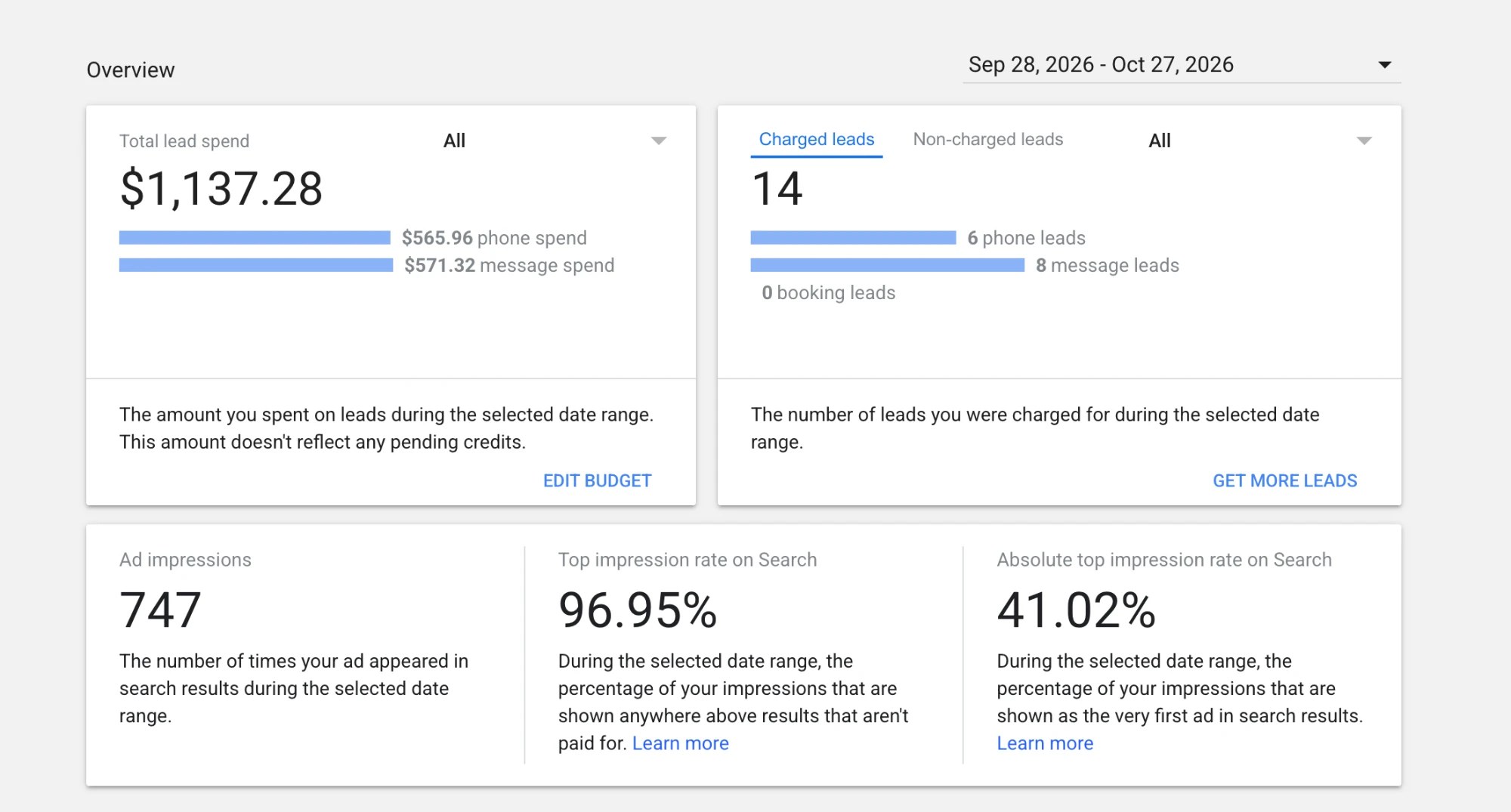
What it costs us, from the account: September 28 to October 27, 2026 was $1,137 for 14 charged leads, six by phone and eight by message, about $81 a lead. The month before was $1,194 and August was $913. Those are leads, not jobs. Turning them into jobs is the quote call, and the ones that were never real you dispute and get credited.
Do you need a website to get moving leads?
Not for the first ten jobs. Your Google Business Profile is your website at the start. It has your number, your photos, your reviews and a button that calls you, and it ranks above any site you could build in a weekend.
Build a real one once you have reviews and photos of your own crew to put on it, because a site with stock photos of smiling strangers hurts more than no site. When you do, a single fast page with a quote form that texts you beats anything with a "services" menu.
What a lead is worth
Every lead source is cheap if the job is priced right and expensive if it is not. A Thumbtack lead that turns into a job quoted below cost loses you money twice. A free Craigslist lead that turns into a job quoted at double your cost, with a deposit and a review at the end, is the best customer you will get all month.
So before you spend a dollar on leads, know your number. The pricing calculator gives you a rate, a minimum and a flat quote from your own costs. Then, when the phone rings, say the number and stop talking.
If you have leads coming in and they are not turning into booked jobs, that is usually the quote, not the channel, and it is one of the things we go through on the strategy call.
- Moving pricing guideHourly or flat, how to say the rate, and how the math works. The calculator itself is in the course.
- Quote-call openingHow our quote call starts, word for word, with your name and rate filled in. The rest is in the course.
- Google Business Profile fieldsFree: what to set up first and the profile fields, word for word.
- One job, start to finishA real one-bedroom move, every message with its timestamp.
- Moving industry FAQThirty-five questions about getting in: trucks, licenses, insurance, pricing, hiring, when to buy the truck.
- GlossaryPortal to portal, released value, COI, and fifty more terms in plain English.
More from the blog
 How to start a moving company in Arizona: no state license, the hostage load law, what it costs, and what to do this weekArizona is one of the few states with no household goods mover license at all. What governs you instead is a 2017 consumer statute on contracts and hostage loads, ADOT's commercial registration and weight fees, and the ordinary rules on insurance, tax and employees. What each one requires, what it costs, and the work you can take this week.11 min read
 How to start a moving company in Georgia: the DPS household goods certificate, the maximum rate tariff, what it costs, and what to do this weekGeorgia licenses movers through the Department of Public Safety and publishes the maximum rate every mover may charge. What the household goods certificate costs, the insurance it requires, the state's hourly ceilings and minimums, the paperwork every Georgia move needs, and the work you can take before any of it.13 min read
 How to start a moving company in Illinois: the ICC license, the hearing, what it costs, and what to do this weekIllinois licenses movers through the Illinois Commerce Commission, and it is one of the few states that makes you prove a public need at a hearing, pass a written exam and file a rate tariff before the first paid move. What the license costs, the insurance it requires, the rules on estimates and liability, and the work you can take before any of it.13 min read
 How to start a moving company in North Carolina: the certificate of exemption, the maximum rate tariff, what it costs, and what to do this weekNorth Carolina licenses movers through the Utilities Commission and publishes the maximum hourly rate every mover may charge. What the certificate of exemption costs, the insurance it requires, the state's rate ceilings and estimate rules, and the work you can take before any of it.13 min read
 How to start a moving company in Ohio: the PUCO certificate, what it costs, and what to do this weekOhio licenses movers through the Public Utilities Commission, and the certificate is cheap, online and quick. What it costs, the insurance it requires, the tariff you write yourself, the paperwork every Ohio move needs, and the work you can take before any of it.12 min read