
How to price a single-item move: couches, safes, stoves and the $75 box

Single-item jobs are how most moving companies get their first customers and how many lose money. How we price a couch across town, a 321-pound wood stove, a hot tub, and why the same item can be pure margin at the end of another move.
My first job was one box. A customer needed it carried from the post office to her house, I charged $75, and it took ten minutes. That job is on the home page of this site because it is the whole business in miniature: someone had a thing they could not move, I could, and the price had nothing to do with how long it took.
Single-item jobs are how you will get your first customers. A couch across town, a washing machine into a basement, a treadmill out of one, a safe, a piano, a hot tub. They come fast, they come from Craigslist and the Google profile, and most people price them by the hour and lose money on every one. Here is how to price them instead, with four real ones.
The problem with hourly on a single item
A couch across town is ninety minutes of work: twenty to load, twenty to drive, twenty to unload, and the rest is the drive to get there and the drive home. Quote that at $200 an hour with no minimum and you have just agreed to move a couch for $300, and if the customer's building has a freight elevator that needs booking, for $200. Meanwhile you rented a truck for the day, or you used yours, and the whole morning is gone.
Hourly with no minimum is how a single-item job becomes charity. The fix is not a higher rate. It is a floor.
Price the item, not the hour
We quote most single items individually: one flat number for one thing, not tied to the hourly rate at all. The customer with one item wants one number, and the number depends as much on our calendar as on the item.
Two questions decide it.
Does it need its own trip? If the couch is the only job that morning, it takes the truck, two people and the drive out of a slot a five-hour move could have had. Then the price starts from the minimum, the least you will leave the driveway for. Ours is three hours on any hourly job, which for two movers at $200 an hour is $600.
Can it ride on a move you already have? If the crew is already in that town with the truck, and the couch is a twenty-minute stop at the end of the day, the truck, the drive and the morning were already paid for by the first customer. Whatever the couch customer pays is almost pure margin, and you can price it to win.
That is why the same couch can be priced two ways in the same week. When a single-item call comes in, look at the calendar before you say a number. "We have a crew in your area Saturday afternoon" is the best sentence in single-item pricing, for you and for the customer.
The floor on its own trip is not greedy. It is the truck, the two people, the drive, and the fact that the job took a morning off the calendar that a five-hour move could have had. The customer who balks at $400 to move a couch was going to rent a van and ask a friend anyway. The customer who pays it is the one whose couch is worth more than $400.
Four real ones
A wood stove into a ski cabin. A 321-pound cast iron stove sitting in a driveway in a mountain town, going inside and onto the hearth. No truck needed, the stove was already there. Two movers, a stove dolly, straps, and about an hour on site. $400 flat.
Why $400 for an hour: the weight. Anything over about 300 pounds is a specialty item, and specialty means the risk of a broken back or a broken hearth is priced in. Nobody moves a cast iron stove for $150 twice.
A hot tub placed on a pad. A customer with a new hot tub on a pallet in the driveway, going onto a pad in the back yard. Two movers with a dolly and straps. $650 flat.
Why more than the stove: it is bigger, it is awkward, the path is outdoors and uneven, and if it cracks it is a $6,000 item. The price is protection as much as labor.
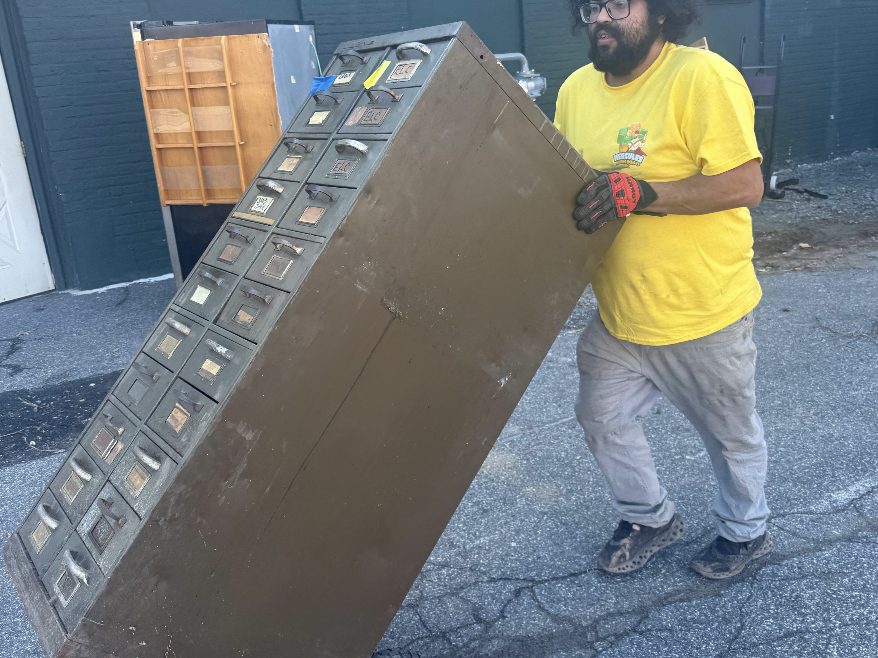
A couch across town. The classic. One sofa from one apartment to another, fifteen minutes apart, ground floor both ends. Two movers, the truck, wrapped, forty-five minutes on site. Closed as a flat number in the $400 range.
Why not less: because the truck had to come, and the truck is the cost. If the customer had a pickup and just needed hands, it would have been a labor-only job at a lower flat rate. Ask that on every single-item call: "Do you have a vehicle, or do you need us to bring the truck?" The answer decides the price.
A box from the post office. $75, ten minutes, no truck, my own two hands. That was the whole company in 2023. I would not take it now as its own trip, but I took it then because it was the first time a stranger paid me to carry something, and the review from that job was the first one on the profile.

The four questions for a single item
The script has nine questions for a full move. For a single item you need four, and you can ask them in one text thread in five minutes.
What is it, and how big? A "dresser" is a $300 job or a $700 job depending on whether it is a nightstand with ambitions or a nine-drawer oak thing. Ask for a photo. Always.
Where is it now, and what is between it and the door? Stairs, a turn, a narrow hallway, a basement bilco door. This is where a two-person job becomes three.
Where is it going, and what is between the truck and where it lands? Same question, other end.
Do you have a vehicle, or do we bring the truck? Truck means the truck's cost is in the price. No truck means labor-only, and labor-only is your cheapest flat rate.
Say it flat
"For the couch, two movers and the truck, wrapped, it is $400 flat." Then stop talking, the same as any other quote. Single-item customers say yes faster than anyone, because one number for one thing is easy to understand and easy to compare to the cost of renting a van and losing a Saturday and a friend.
If it is heavy or unusual, say the weight out loud before the price: "For a cast iron stove that size, it is a two-man specialty job, and it is $400 flat." The word specialty is doing work there. It tells them why it is not $150 without you having to defend it.
Why single items matter more than they pay
You will not get rich on couches. What single items do is put you in forty houses in your first three months, in front of forty people who now have your number and a reason to remember it, on days that would otherwise have been empty. The couch customer calls in the spring when the whole apartment moves. The stove customer has a brother. The $75 box turned into a five-star review, and the review turned into the next job, and that is the actual product of a single-item job: a customer, at full price, who knows your name.
Price the item, not the hour. Check the calendar first, say it flat, ask for the photo, and take every one you can fit around the real moves, especially the ones that can ride at the end of a move you already have. The other small job worth saying yes to is loading or unloading a truck the customer already rented. Labor-only moving prices the same way, with no truck in the math. And if you are not sure what your minimum should be in your market, that is a five-minute question on the strategy call, and one we get asked on nearly every one.
- Moving pricing guideHourly or flat, how to say the rate, and how the math works. The calculator itself is in the course.
- Quote-call openingHow our quote call starts, word for word, with your name and rate filled in. The rest is in the course.
- Google Business Profile fieldsFree: what to set up first and the profile fields, word for word.
- One job, start to finishA real one-bedroom move, every message with its timestamp.
- Moving industry FAQThirty-five questions about getting in: trucks, licenses, insurance, pricing, hiring, when to buy the truck.
- GlossaryPortal to portal, released value, COI, and fifty more terms in plain English.
More from the blog
 How to start a moving company in Arizona: no state license, the hostage load law, what it costs, and what to do this weekArizona is one of the few states with no household goods mover license at all. What governs you instead is a 2017 consumer statute on contracts and hostage loads, ADOT's commercial registration and weight fees, and the ordinary rules on insurance, tax and employees. What each one requires, what it costs, and the work you can take this week.11 min read
 How to start a moving company in Georgia: the DPS household goods certificate, the maximum rate tariff, what it costs, and what to do this weekGeorgia licenses movers through the Department of Public Safety and publishes the maximum rate every mover may charge. What the household goods certificate costs, the insurance it requires, the state's hourly ceilings and minimums, the paperwork every Georgia move needs, and the work you can take before any of it.13 min read
 How to start a moving company in Illinois: the ICC license, the hearing, what it costs, and what to do this weekIllinois licenses movers through the Illinois Commerce Commission, and it is one of the few states that makes you prove a public need at a hearing, pass a written exam and file a rate tariff before the first paid move. What the license costs, the insurance it requires, the rules on estimates and liability, and the work you can take before any of it.13 min read
 How to start a moving company in North Carolina: the certificate of exemption, the maximum rate tariff, what it costs, and what to do this weekNorth Carolina licenses movers through the Utilities Commission and publishes the maximum hourly rate every mover may charge. What the certificate of exemption costs, the insurance it requires, the state's rate ceilings and estimate rules, and the work you can take before any of it.13 min read
 How to start a moving company in Ohio: the PUCO certificate, what it costs, and what to do this weekOhio licenses movers through the Public Utilities Commission, and the certificate is cheap, online and quick. What it costs, the insurance it requires, the tariff you write yourself, the paperwork every Ohio move needs, and the work you can take before any of it.12 min read