
Hiring movers: your first helper, your first foreman, and when to stop carrying the couch
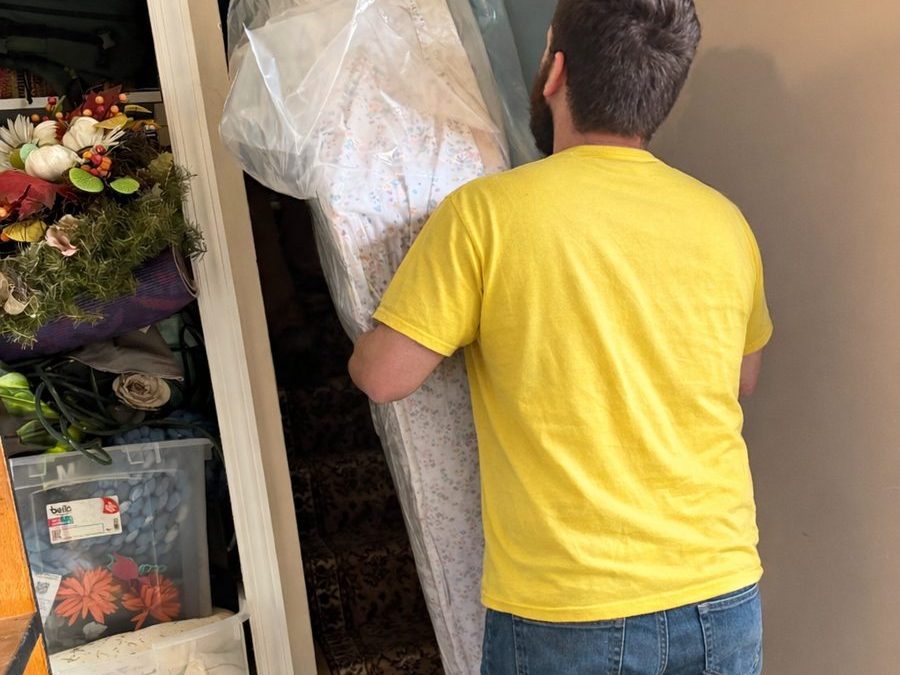
When a new moving company should hire, what to pay a helper and a foreman, why the first real hire is a foreman and not a helper, and the four things to have in place before anyone starts.
For two years I was the one on the truck every day. The company paid well and it never grew, because the ceiling was my own arms. Then Liam joined at the end of 2025, and the question stopped being "how do I do more jobs" and became "who does them."
This August the company billed $82,000 across fifty-two jobs, and neither of us carried a box on any of them. Today it is about ten employees. Here is what we learned about hiring movers, in the order it comes up.
Hire number zero: the helper for one job
Before you hire anyone, you will need a second set of hands. Most furniture is a two-person lift, and a single item becomes a two-person job the moment there are stairs.
That person is a helper paid by the day, not a business partner. What to pay:
- $20 to $25 an hour for a first helper on your first jobs.
- Paid portal to portal, from the time you leave to the time you are back, the same way the customer pays you.
- Tips are theirs. Never count on them in the math.
The salary sites say the national average for a mover is around $18 an hour. That is an average of every mover on every kind of job, and it tells you nothing about what keeps a good one coming back on Saturday. Our movers make $22 to $30 an hour depending on experience, with time and a half over forty hours. The full wage and owner-pay math.
Employee or contractor?
Some new movers pay helpers as contractors to avoid payroll and workers' comp. For someone you schedule, direct on the job and pay by the hour, that usually does not hold up. In most states, including ours, you need workers' comp the day you have an employee, and an injured helper without coverage is the fastest way to lose the company.
Get a workers' comp quote before the first hire. What a moving company's insurance covers and costs.
When to hire your first real employee
When you are turning down jobs because there are not enough of you. Not before.
Hiring before the work is there feels like growth and is actually a payroll you have to feed with jobs you do not have yet. The same logic as buying a truck too early: a fixed cost that makes you take bad work to cover it.
The signal is specific. Count the calls you said no to last month because the calendar was full. If that number keeps showing up, it is time.
The first real hire is a foreman, not a helper
This is the hire almost nobody makes, and it is the one that matters.
A helper adds hands to a job you are still running. A foreman runs the job without you: drives the truck, talks to the customer, wraps and stacks to your standard, handles the walkthrough and the invoice. A helper makes you a bigger crew. A foreman makes you a company.
Pay at the top of your range to get that person. A good foreman is the single reason you are not on the truck, and the difference between $22 and $30 an hour is small next to what it buys you.
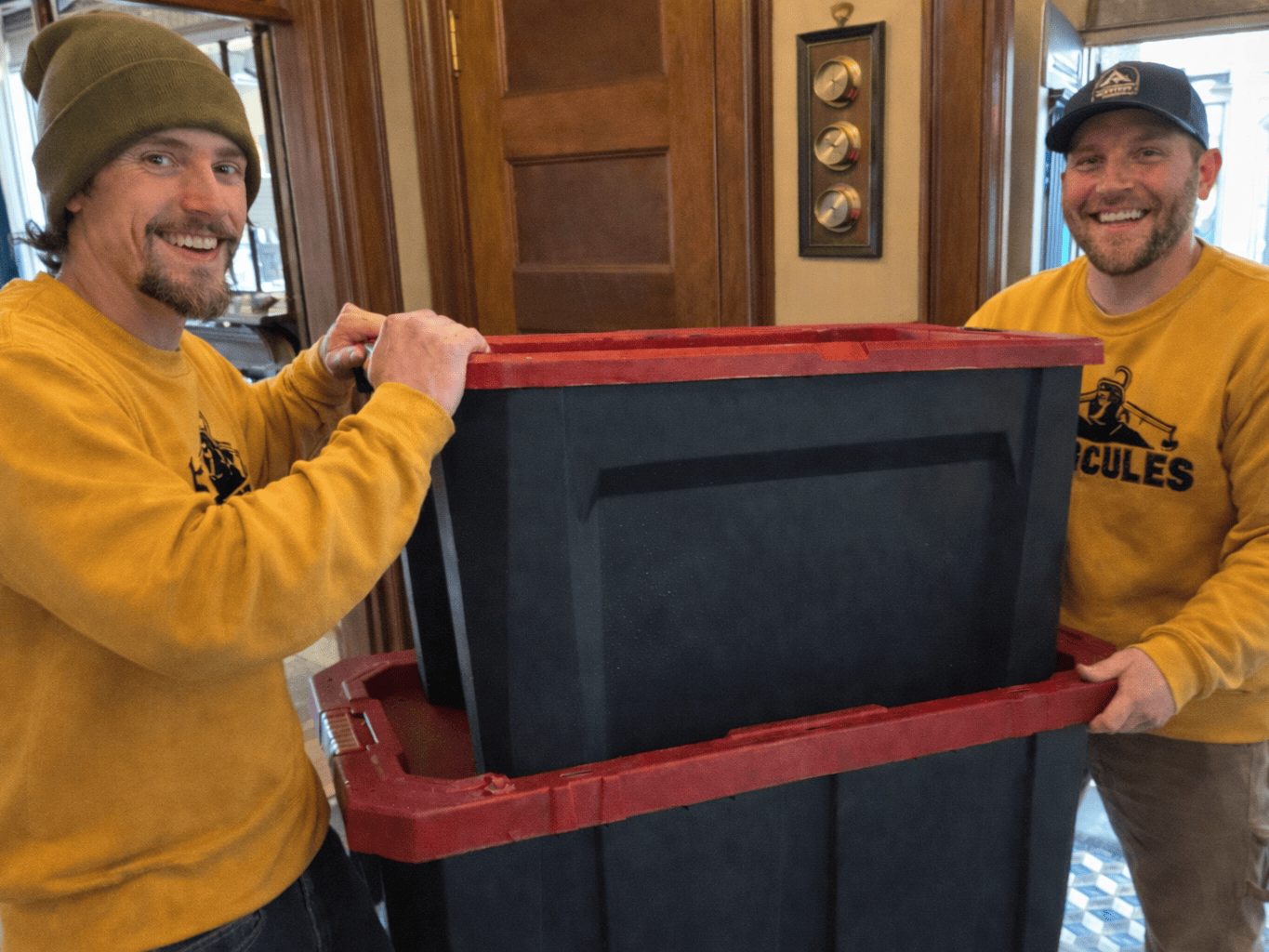
Four things to have before anyone starts
- Workers' comp, quoted and active.
- A way to pay hourly and track time. We use Connecteam for scheduling and time, and it is free under ten employees. The rest of the stack, by stage.
- A written checklist of how a job runs. Arrival, walkthrough, wrapping, loading order, the final walkthrough, the invoice, the review. The standard has to live on paper, not in your head, or it leaves with you.
- Your rates already right. If the job does not bill enough to pay a crew and leave the company something, hiring makes the problem bigger, not smaller. How to price a job.
How many movers does a job need?
You will be deciding this on every quote once you have a crew:
- Two movers for anything up to a two-bedroom, which is most local moves.
- Three when there are stairs at both ends, a piano or a safe, a full three-bedroom house, or the customer wants it done in a morning.
- Four or five for a full pack or a big house on a tight timeline.
The rate scales with the crew, so a three-mover crew is not more expensive per hour of work. It is faster.
When you can stop being on the truck
When a job bills enough to pay a full crew and still leave the company more than you would have earned carrying it yourself. On a three-mover local move, that means your rate covers roughly $500 in wages and $150 in truck costs and leaves the rest. At our rates, that is every job.
What actually keeps owners on the truck longer is not money. It is trust: not having a foreman they believe in. So hire that person first, ride along for ten jobs, and then stay home. Your job becomes quoting, scheduling, pricing and hiring, which is where the business was always going to end up.
The short version
A helper by the day when the lift needs two. Workers' comp before anyone is an employee. The first real hire when you are turning down work, and make it a foreman, paid at the top of the range. Ten ride-alongs, then stay home.
If you are at the point of making that first hire and want to talk through the numbers, bring it to the strategy call. The whole sequence, from the first job to the first crew, is in how to start a moving company.
- Moving pricing guideHourly or flat, how to say the rate, and how the math works. The calculator itself is in the course.
- Quote-call openingHow our quote call starts, word for word, with your name and rate filled in. The rest is in the course.
- Google Business Profile fieldsFree: what to set up first and the profile fields, word for word.
- One job, start to finishA real one-bedroom move, every message with its timestamp.
- Moving industry FAQThirty-five questions about getting in: trucks, licenses, insurance, pricing, hiring, when to buy the truck.
- GlossaryPortal to portal, released value, COI, and fifty more terms in plain English.
More from the blog
 How to start a moving company in Arizona: no state license, the hostage load law, what it costs, and what to do this weekArizona is one of the few states with no household goods mover license at all. What governs you instead is a 2017 consumer statute on contracts and hostage loads, ADOT's commercial registration and weight fees, and the ordinary rules on insurance, tax and employees. What each one requires, what it costs, and the work you can take this week.11 min read
 How to start a moving company in Georgia: the DPS household goods certificate, the maximum rate tariff, what it costs, and what to do this weekGeorgia licenses movers through the Department of Public Safety and publishes the maximum rate every mover may charge. What the household goods certificate costs, the insurance it requires, the state's hourly ceilings and minimums, the paperwork every Georgia move needs, and the work you can take before any of it.13 min read
 How to start a moving company in Illinois: the ICC license, the hearing, what it costs, and what to do this weekIllinois licenses movers through the Illinois Commerce Commission, and it is one of the few states that makes you prove a public need at a hearing, pass a written exam and file a rate tariff before the first paid move. What the license costs, the insurance it requires, the rules on estimates and liability, and the work you can take before any of it.13 min read
 How to start a moving company in North Carolina: the certificate of exemption, the maximum rate tariff, what it costs, and what to do this weekNorth Carolina licenses movers through the Utilities Commission and publishes the maximum hourly rate every mover may charge. What the certificate of exemption costs, the insurance it requires, the state's rate ceilings and estimate rules, and the work you can take before any of it.13 min read
 How to start a moving company in Ohio: the PUCO certificate, what it costs, and what to do this weekOhio licenses movers through the Public Utilities Commission, and the certificate is cheap, online and quick. What it costs, the insurance it requires, the tariff you write yourself, the paperwork every Ohio move needs, and the work you can take before any of it.12 min read