
What to charge for a two-bedroom move

The most common job you will ever quote, priced two ways. What we charged for one in August, what you should charge on your first one, and how to know which number to say on the phone.
If you start a moving company, the two-bedroom is the job you will quote more than any other. Apartment to apartment, or a small house across town. Two adults, maybe a kid, a couch, a couple of beds, a dresser that does not want to go down the stairs.
So here is what to charge for it. Not a range pulled from the internet. A real one we did last month, and then the same job priced the way you should price it in your first year.
The job
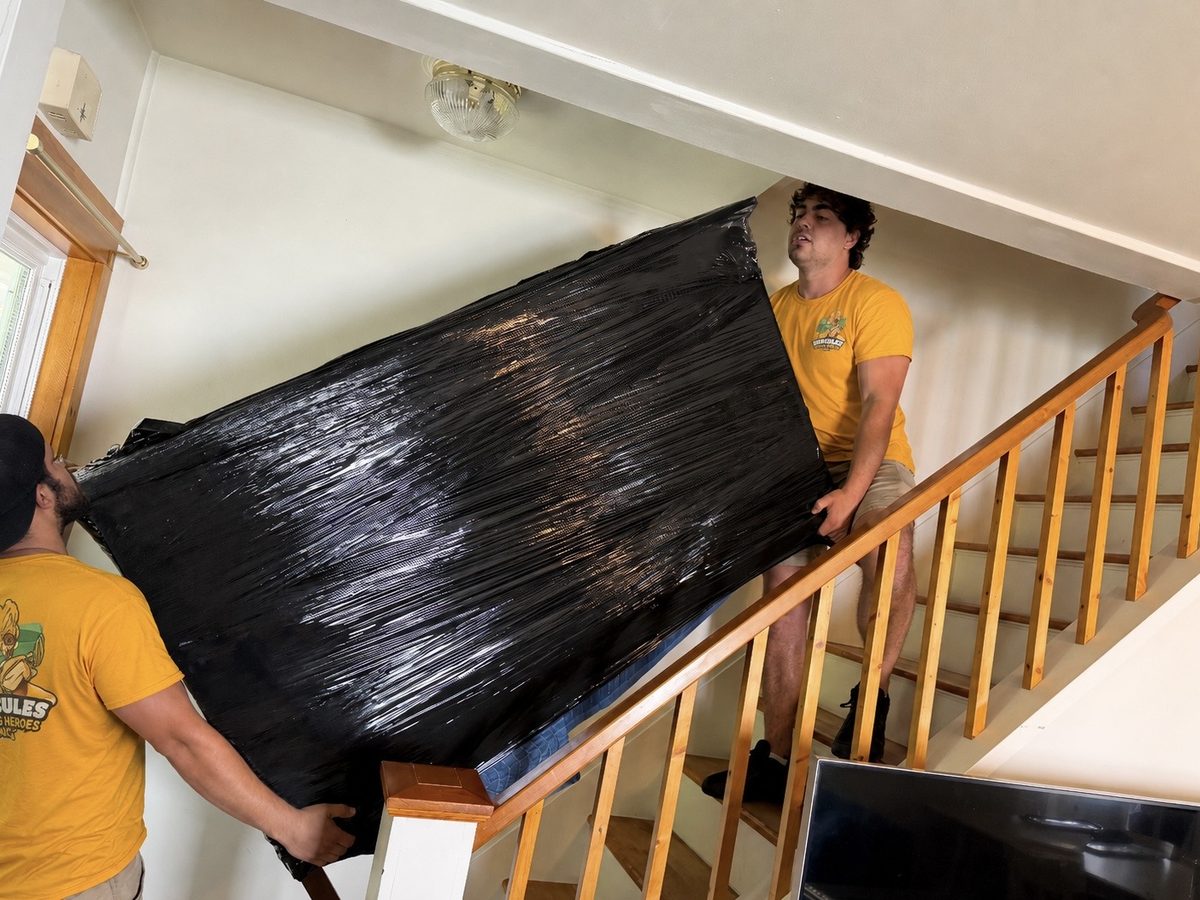
Third week of August, a Saturday. A two-bedroom apartment, second floor, no elevator, going about twenty-five minutes across town to a house with a ground-floor entry. Full pack was already done by the customer. Roughly forty boxes, two beds, two dressers, a sectional couch, a dining table and chairs, a TV, a few plants, the usual kitchen bins.
We sent three movers. The crew left our lot at 8:00, arrived at 8:30, loaded until about 11:15, drove, unloaded, and were back at the lot a little after 2:00. Call it six hours portal to portal.
We charged $250 an hour, portal to portal, three movers and a 26-foot truck, and the customer paid about $1,500.
Before you close the tab because that number feels impossible, read the rest. It was impossible for me too, for about two years.
Why we could charge that
We did not charge $250 an hour because we are better at carrying dressers than you are. We charged it because by the time this customer called, she had already read our reviews, seen photos of our crews with wrapped furniture, and been told by a neighbor that we showed up on time. The price was never really the question. Whether we had the Saturday open was the question.
That is what the marketing page is about, and it is what gets built over months, not before your first job. So do not use our number on your first quote. Use yours, and here is how to find it.
Your version, first year
Say you take the same job with two movers instead of three, because it is you and one guy you trust, and a rented truck.
Run it through the calculator and it looks like this:
- Two movers on the job
- Five hours on site, which is realistic for two people doing what our three did in four and a half
- An hour and a half of drive time you do not bill for directly: pickup of the rental in the morning, the drive between the two addresses, returning the truck
- $22 an hour to the helper (what movers actually make, and why $22 is the right first number). Pay yourself the same on paper, even if the money stays in the business
- $140 for the truck rental for the day, fuel included
- $25 in tape, shrink wrap and a couple of blankets you will use up
Total cost of the job: about $451.
Double it. That is your flat price: $902. Quote $900 and stop talking.
Nine hundred dollars for a two-bedroom, from a company nobody has heard of, with a rented truck. Can you actually get that? Yes, if you have done the small things the marketing page lists. A name, a few real photos, a couple of reviews from the first friends-and-family jobs, and a calm voice on the phone that says "nine hundred, that includes everything, we bring the wrap." Plenty of your competitors are quoting $600 with no photos and a cash-only text. You are not competing with them. You are competing with the customer's fear that her dresser gets dropped on the stairs.
You will not win every one at $900. You do not need to. You need to win enough of them that your Saturdays fill, and the ones you lose at $900 were going to be your worst customers anyway.
Why double, and not 30 percent
Because you can always come down and you can never go up.
If you quote $900 and she hesitates, you have room. "If you can be flexible on the day, I can do $850." You just closed a job at 1.9 times your cost and she feels like she got something. If you quote $600 and she says yes immediately, you have learned that you left $300 on the table, and there is no phone call in the world where you get to say "actually, make it $900."
Double your cost also survives the things you did not plan for. The elevator that is broken. The dresser that has to come apart. The helper who is 40 minutes late. At 30 percent margin, one of those turns a good day into a free one. At 100 percent, you absorb it and still get paid.
When to say an hourly rate instead
Here is the part most beginners never learn, and it is the part that saved us the most money.
Flat rate only works when two things are true (the full rule, with five real jobs). The scope is defined, and the customer seems like the kind of person who will have it ready when you arrive. If she has sent you photos, told you the box count, and answered your questions straight, quote flat. She wants a number, and a confident flat number is what wins the job.
If she says "I mean, it is mostly packed," or she is not sure whether the couch is coming, or she "might have a few things in the garage too," you do not quote flat. You quote hourly, portal to portal, and you explain it in one sentence.
For the job above, the hourly version is the same $902 spread over the six and a half hours the truck is out: about $139 an hour, portal to portal, three-hour minimum. You say it like this:
"For two movers and the truck it is $139 an hour, and the clock runs from when we leave our lot to when we get back. A two-bedroom like yours is usually five to six hours on site, so you are looking at roughly nine hundred."
Same money if the job goes as described. If the garage turns out to have a full shop in it, you are paid for every hour of it, and nobody has an argument at the door.
Portal to portal is the phrase that matters. It means the customer pays for the drive time, and you have said so up front, in plain words, before anything is loaded. Most beginners bill from arrival to departure and eat the drive. On the job above, that is an hour and a half of two people's time and a truck, given away, on every job, forever.
The number to write down
For your first year, a two-bedroom with two movers and a rented truck is a $900 flat job or a $139-an-hour job, portal to portal, in most of the country. Adjust the wage and the rental for your area, run it through the calculator, and double what comes out.
Then go do fifty of them, get the reviews, put the photos up, and one day you will look at a six-hour two-bedroom, send three guys, and charge $1,500 for it. Nobody will blink. That is not a sales trick. It is what trust is worth, and it is built one wrapped dresser at a time. The calls that lead to those fifty jobs start with a free profile, an ad and twenty texts: how to get moving leads.
If you want to talk through your own numbers, your market, and whether your first quote is too low, that is exactly what the strategy call is for. Bring a job you are about to quote and we will price it together.
- Moving pricing guideHourly or flat, how to say the rate, and how the math works. The calculator itself is in the course.
- Quote-call openingHow our quote call starts, word for word, with your name and rate filled in. The rest is in the course.
- Google Business Profile fieldsFree: what to set up first and the profile fields, word for word.
- One job, start to finishA real one-bedroom move, every message with its timestamp.
- Moving industry FAQThirty-five questions about getting in: trucks, licenses, insurance, pricing, hiring, when to buy the truck.
- GlossaryPortal to portal, released value, COI, and fifty more terms in plain English.
More from the blog
 How to start a moving company in Arizona: no state license, the hostage load law, what it costs, and what to do this weekArizona is one of the few states with no household goods mover license at all. What governs you instead is a 2017 consumer statute on contracts and hostage loads, ADOT's commercial registration and weight fees, and the ordinary rules on insurance, tax and employees. What each one requires, what it costs, and the work you can take this week.11 min read
 How to start a moving company in Georgia: the DPS household goods certificate, the maximum rate tariff, what it costs, and what to do this weekGeorgia licenses movers through the Department of Public Safety and publishes the maximum rate every mover may charge. What the household goods certificate costs, the insurance it requires, the state's hourly ceilings and minimums, the paperwork every Georgia move needs, and the work you can take before any of it.13 min read
 How to start a moving company in Illinois: the ICC license, the hearing, what it costs, and what to do this weekIllinois licenses movers through the Illinois Commerce Commission, and it is one of the few states that makes you prove a public need at a hearing, pass a written exam and file a rate tariff before the first paid move. What the license costs, the insurance it requires, the rules on estimates and liability, and the work you can take before any of it.13 min read
 How to start a moving company in North Carolina: the certificate of exemption, the maximum rate tariff, what it costs, and what to do this weekNorth Carolina licenses movers through the Utilities Commission and publishes the maximum hourly rate every mover may charge. What the certificate of exemption costs, the insurance it requires, the state's rate ceilings and estimate rules, and the work you can take before any of it.13 min read
 How to start a moving company in Ohio: the PUCO certificate, what it costs, and what to do this weekOhio licenses movers through the Public Utilities Commission, and the certificate is cheap, online and quick. What it costs, the insurance it requires, the tariff you write yourself, the paperwork every Ohio move needs, and the work you can take before any of it.12 min read